


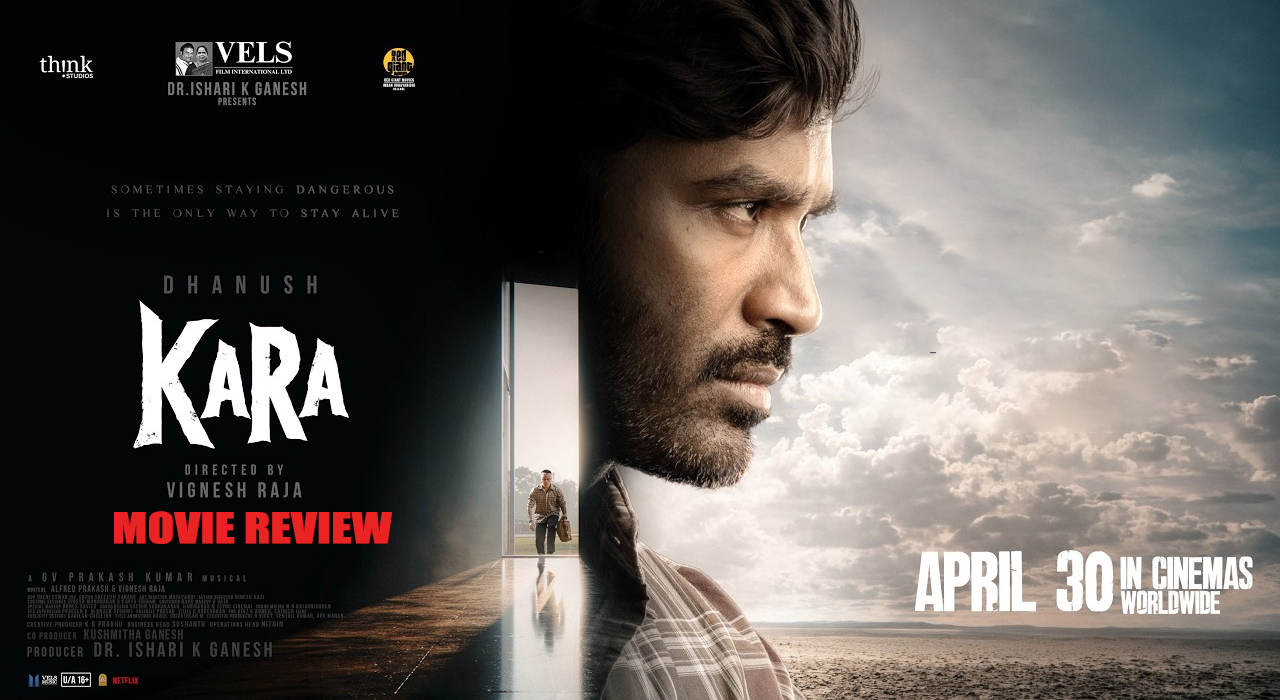
Kara Review: Strong Start, Weak Finish
Sarkar Rating: 2.5/5 Release Date : April 30, 2026
Cast
Dhanush, Mamitha Baiju, K. S. Ravikumar, Karunas, Jayaram, Prithvi Pandiarajan, Suraj Venjaramoodu
Crew
Director, Story, Screenplay: Vignesh Raja
Music: G. V. Prakash Kumar
Cinematography: Theni Eswar
Editing: Sreejith Sarang
Producer: Ishari K. Ganesh
Production: Vels Film International, Think Studios, Vigneswara Entertainments
What Is the Film About?
Kara tells the emotional story of a father and son, built around duty, debt, and redemption. After his father’s death, a son takes it upon himself to fulfill an unfinished promise, a journey that gradually pushes him into becoming an unlikely Robin Hood figure for the people around him. What begins as a personal mission soon turns into a larger struggle involving morality, sacrifice, and survival.
Performances
Dhanush once again proves why he remains one of the most dependable performers in Indian cinema. Kara may not entirely match his caliber, but his performance certainly does. Playing a role that falls comfortably within his strengths, he brings sincerity, emotional depth, and effortless realism to the character. Though the role carries shades of characters he has portrayed before, he makes it consistently engaging.
Mamitha Baiju, cast as Dhanush’s wife, gets limited screen time and little narrative importance. Her character is written with restraint, but unfortunately lacks enough substance to leave a strong impression.
Analysis

Director Vignesh Raja starts Kara on a promising note, establishing a grounded rural backdrop and emotional core that immediately sets the tone. The film’s strongest quality lies in its simplicity. It avoids exaggerated drama and instead builds its world with relatable emotions and realistic character dynamics.
The emotional relationship between Dhanush and his father, played by K. S. Ravikumar, becomes the film’s backbone. Their scenes carry warmth and emotional weight, giving the narrative much-needed heart. Even if the setup feels familiar and occasionally old-fashioned, the sincerity in storytelling helps maintain engagement.
The first half unfolds steadily, culminating in a well-built pre-interval stretch that creates decent tension and transitions effectively into the central conflict. It is not extraordinary, but it is neatly executed and emotionally rooted.
The real problem begins in the second half. The film shifts its focus toward the heist and investigative elements but fails to sustain the same emotional grip. What should have elevated the story instead dilutes its strength. The screenplay becomes repetitive and stretched, with the pacing turning noticeably sluggish.
Characters that could have added narrative weight, including Jayaram as the bank manager and Suraj Venjaramoodu as the investigating officer, remain underdeveloped. Their presence feels functional rather than impactful.
As the film progresses, the emotional clarity seen earlier begins to fade, replaced by a predictable and tiring narrative rhythm. The climax, instead of delivering emotional payoff, feels routine and formula-driven, resulting in a weak ending.
That said, the second half is not entirely without merit. A few isolated moments still manage to engage, but they are not enough to offset the film’s dragging structure.
Performances by Others
K. S. Ravikumar delivers one of the film’s most effective supporting performances. His understated portrayal of the father adds emotional credibility and becomes essential to the first half’s impact.
Suraj Venjaramoodu performs capably in the cop’s role, though the writing restricts the character’s depth. Jayaram remains reliable as always, bringing dignity to his role despite limited scope.
The supporting cast collectively fits the film’s rural atmosphere well and contributes to the grounded nature of the storytelling.


Music and Technical Departments
G. V. Prakash Kumar’s songs do not leave a lasting impression, but his background score effectively supports the film’s emotional and dramatic beats.
The cinematography by Theni Eswar stands out as a major strength. The rural visuals are captured with richness and authenticity, making the film visually appealing throughout.
Sreejith Sarang’s editing works well in the first half but feels less effective later, where tighter cuts could have significantly improved the pacing.
The production values from Vels Film International are polished and align well with the film’s scale and storytelling style.
Verdict
Kara works in parts, particularly in its emotionally driven first half, where strong performances and grounded storytelling create genuine engagement. However, the second half loses direction, turning into a repetitive and exhausting experience that fails to deliver the expected payoff.
Despite its heartfelt intent and Dhanush’s solid performance, Kara ultimately remains a film that starts with promise but fades into an underwhelming finish.
Read Also: Biker Review: Strong Performances Power a Formulaic Sports Drama