


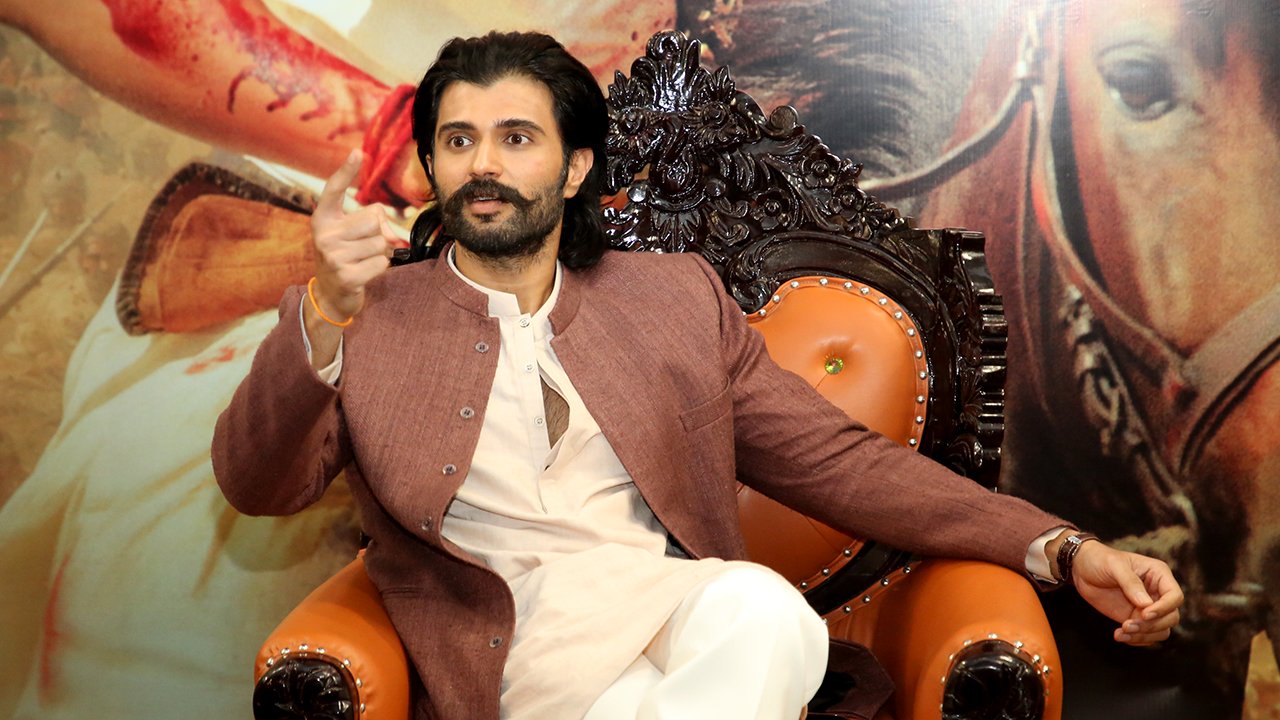
Ranabaali Will Be an Emotional Cinematic Experience: Vijay Deverakonda
Vijay Deverakonda Opens Up About the Film’s Historical Background, Emotional Depth, Action Sequences, Rashmika Mandanna’s Role and His Commitment to Authentic Storytelling
Vijay Deverakonda’s ambitious pan-India film Ranabaali is gearing up for a grand worldwide theatrical release on October 16, coinciding with Vijayadashami. Directed by Rahul Sankrityan, the film stars Rashmika Mandanna as the female lead and is presented by T-Series and produced by Naveen Yerneni and Y. Ravi Shankar under the banner of Mythri Movie Makers on a huge budget.
Set against a historical backdrop, Ranabaali explores forgotten chapters of Indian history, the struggles of ordinary people under British rule, and the courage of local heroes who stood up against oppression. The film combines historical elements, intense action, emotional drama and cultural storytelling to bring a lesser-known world to the big screen.
In an exclusive interaction with the media, Vijay Deverakonda spoke about the film’s purpose, extensive research, the importance of preserving historical narratives, his preparation for the titular role, his on-screen chemistry with Rashmika Mandanna, and his confidence in the film’s theatrical experience.
“Ranabaali Is a Film We Have Made with a Clear Purpose”
Q: How confident are you about Ranabaali as it approaches its theatrical release?
Vijay Deverakonda: After Pelli Choopulu, this is a film I am promoting with considerable confidence and comfort. We have taken our time, checked the film multiple times and made sure everything is in place before bringing it to audiences.
The film has extensive CGI work, particularly because of the world we have created. We understood the importance of visual effects during pre-production itself, and we delivered all the CGI sequences as early as February.
Every film is made for a different reason. We made Ranabaali with a specific purpose, and that purpose has guided every decision we have taken. We have approached the subject with a strong sense of responsibility and have been extremely careful about how we present it.
Recently, while speaking to a senior journalist in Chennai, I learned more about the devastating famine that occurred in Bengal. He spoke about how countless people died of hunger and how reports published in American newspapers brought the brutal realities of British rule in India to the attention of people overseas. He also shared his perspective on how these accounts influenced people’s understanding of freedom and oppression.
Stories like these make you question how much of our history we truly know.
“Understanding Our History Is Essential to Thinking About Our Future”
Q: What made you choose a story rooted in the darker chapters of Indian history?
Vijay Deverakonda: When we learn about the injustices suffered by our people in the past, we are often shocked. We wonder whether such terrible things could really have happened. There were people who viewed Indians with complete disregard, treating human beings as though their lives had little value.
If we want to think seriously about our country’s future, we must understand its past.
I believe that if we have made the right attempt with Ranabaali, it could encourage filmmakers to explore more stories from forgotten chapters of Indian history. There are so many people, incidents and struggles that have not received the attention they deserve. Cinema can play an important role in bringing these stories to a wider audience.
Otherwise, filmmakers may hesitate to take up such subjects. That is why we approached this film as a responsibility rather than just another commercial project. We wanted to tell the story carefully, honestly and with the seriousness it deserves.
“The Railways Were Also Used to Transport India’s Wealth”
Q: The film appears to examine the impact of British colonial rule on ordinary Indians. What did your research reveal?
Vijay Deverakonda: The British did not initially come to India with the intention of settling here permanently. They came for trade, but gradually expanded their control over the country.
Even today, some people believe the British built the Indian railway network primarily for our convenience. But we must also understand the economic objectives behind that infrastructure. Railways connected important ports and helped transport agricultural produce, cotton and other resources that were extracted from India.
The famines that occurred during British rule were devastating. The Great Famine of 1876–1878 affected large parts of India, including the Madras Presidency, and caused enormous loss of life. The death toll in historical accounts varies, but the scale of human suffering was immense.
We also need to understand the policies that worsened these crises. During severe famines, people who were already struggling to survive were burdened by taxation and forced into harsh labour conditions. Many had to work on public projects for meagre food rations, while those unable to work faced starvation.
When you begin researching these events, you realise how heartbreaking the experiences of ordinary people must have been.
History is often taught through the dates of battles and the names of rulers. But the suffering of the people who lived through those periods deserves equal attention. We want audiences to think about those human stories.
“Our Culture and Beliefs Helped People Remain United”
Q: How important are Indian culture and local traditions to Ranabaali?
Vijay Deverakonda: Our culture, beliefs and traditions helped communities remain connected even during extremely difficult times. During famines and other crises, people turned to their village deities, organised jatras and held on to the hope that the following year would be better.
At that time, resistance was not always expressed through a unified demand for national independence. In many places, people stood up because outsiders had taken control of their land, challenged their dignity and interfered with their way of life.
Our history is filled with brave individuals who stood up for their people. Many of these heroes died at a very young age, yet their courage continued to inspire generations. These forgotten heroes are among the inspirations behind Ranabaali.
Their stories survived through folk songs and oral traditions. Later, some writers documented these accounts in books, helping preserve them for future generations.
Through this film, we want to bring audiences closer to those heroes, the hardships faced by our ancestors, the mistakes that weakened our society, and the circumstances that enabled the British to establish control over such a vast country.

We want viewers across the world to experience these stories on the big screen.
“We Must Learn from the Past to Avoid Repeating Its Mistakes”
Q: What message do you hope audiences take away from the film?
Vijay Deverakonda: The British often exploited divisions among Indian rulers. By creating mistrust, encouraging conflicts and taking advantage of political rivalries, they gradually expanded their control over different kingdoms.
We must also acknowledge that greed, conspiracies and mistakes by some of our own people played a role in these developments. History becomes meaningful when we are willing to examine all these factors rather than look at events from only one perspective.
In our history lessons, we are often expected to remember the dates of battles such as the Battle of Plassey and the Anglo-Mysore Wars. But how much do we learn about the suffering of ordinary people during those times?
We need to understand what happened to us in the past so that we can recognise similar patterns in the future. History has a way of repeating itself when societies fail to learn from their mistakes.
Even today, divisions based on caste, religion and region continue to create barriers among people. The world is still witnessing conflicts between nations. Understanding the past can help us reflect on the importance of unity, dignity and social responsibility.
That is one of the larger ideas we want Ranabaali to communicate.
“The Film Begins with a Folk Narrative and Offers Proper Storytelling”
Q: The promotions suggest that Ranabaali will offer a different cinematic experience. What can audiences expect?
Vijay Deverakonda: We have complete confidence in the film, and that is why we are promoting it with conviction.
Rahul once sent me a folk-performance video recorded at a jatra in Anantapur. The performers were singing about several historical heroes with great pride and emotion. That video stayed with me because it showed how history can survive through the memories and traditions of ordinary people.
Ranabaali also begins with a folk narrative. Through it, we introduce audiences to the atmosphere of that period, the culture of our villages and the greatness of the heroes who lived during those times.
Every element of the film serves the same larger purpose. We are not trying to create hype merely for the sake of promotions. We have put genuine effort into presenting the film and its world through the trailer.
Once audiences enter the theatre and begin watching the film, I believe they will be drawn into its world within the first five minutes. This is not a film that simply cuts rapidly from one scene to another to generate excitement. It follows proper storytelling, allowing the characters, emotions and situations to develop naturally.
We want the audience to experience the world of Ranabaali, not merely watch a collection of dramatic sequences.
“The Action Is Rooted in the Brutal Reality of That Period”
Q: The film features intense action sequences. How did you approach the violence depicted in the story?
Vijay Deverakonda: We designed the action sequences based on the violence and circumstances associated with that period. In reality, many of those situations were even more brutal than what we have chosen to portray on screen.
We have shown only as much violence as the story requires. The world of Ranabaali is not a soft or gentle one. During those times, conflicts could quickly become matters of life and death. People did not always have the opportunity to sit down and resolve their differences through conversation.
However, we have not included action merely for the sake of action. Every sequence has to serve the story and the character.
The film has a runtime of approximately two hours and 50 minutes. Rahul has designed the titular character’s appearance, body language and manner of speaking to suit the period and the world he inhabits.
His approach is raw, realistic and rooted in the character’s circumstances. We wanted the entire film to feel authentic rather than artificially stylised.
“I Trained for Two to Three Months to Get the Rayalaseema Dialect Right”
Q: How challenging was it to prepare for the role of Ranabaali?
Vijay Deverakonda: One of my major challenges was learning the Rayalaseema dialect and preparing for horse riding.
I studied in Puttaparthi for ten years, so I already had some familiarity with the Rayalaseema dialect. However, familiarity alone was not enough for this role. I had to work on getting the pronunciation, delivery and overall manner of speaking right.
I spent around two to three months practising the dialect and dialogues. Rahul had done extensive research into how the character should speak, and he was very particular about getting every detail right.
We often see heroic characters in films who speak very little. Ranabaali is different. He speaks with the force and intensity that Rahul believes a hero from that world would naturally possess.
I respect that attention to detail. Whenever I take up a film, I try to approach the character as though I am living that person’s life. Every film leaves a personal impact on me and changes me in some way. Ranabaali has affected me personally as well.
“Rashmika’s Presence Adds Emotional Depth to Our Characters”


Q: Why did you choose Rashmika Mandanna to play Jayamma?
Vijay Deverakonda: Rahul suggested Rashmika’s name for the role of Jayamma, and I also felt she would be the right choice.
Her name had come up for some of my earlier films, but I did not feel those particular projects were the right fit for her. I wanted our next collaboration to be something special, with strong characters and meaningful drama.
Ranabaali gave us that opportunity. There is a good emotional arc between our characters, and I believe working together has added another layer of depth to their relationship.
When actors have a certain familiarity with each other in real life, that understanding can sometimes influence the way their characters connect on screen. In this film, I feel that emotional familiarity adds to the relationship we portray.
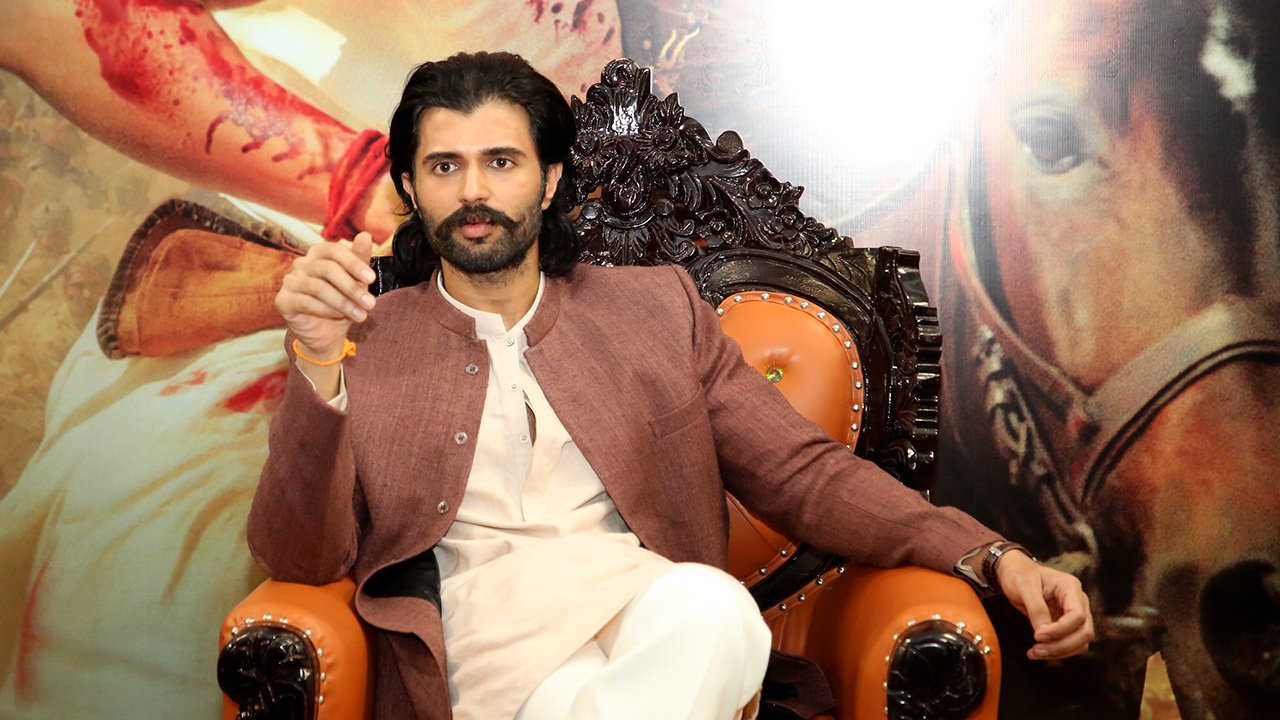
Audiences will be able to experience that emotional connection when they watch the film.
“Rahul Sankrityan Is the Heart and Soul of Ranabaali”
Q: How would you describe your collaboration with director Rahul Sankrityan?
Vijay Deverakonda: Rahul is the heart and soul of Ranabaali. The producers and I have contributed our inputs, but he has taken complete ownership of the film and its creative vision.
He has worked extensively on the research, characterisation and visual world. He has also ensured that every role has been cast appropriately for the story.
Arnold Vosloo has delivered a good performance, and I am happy with the way the different characters have come together.
Rahul has a clear understanding of the world he wants to present. His approach is realistic and mass-oriented, but he never loses sight of the emotional foundation of the story. That balance is important for a film of this scale.
“I Want Audiences to Leave the Theatre Talking About Our History and Culture”
Q: What kind of experience should audiences expect from Ranabaali?
Vijay Deverakonda: Ranabaali will offer a great cinematic experience. It will give audiences an emotional high and keep them engaged throughout.
I believe people will walk out of the theatre wanting to discuss our history, culture and the stories of the people who came before us.
We have tried to create a world that feels authentic, with strong characters, emotional depth, action and a compelling narrative. The film is not simply about recreating a period in history; it is also about understanding the people who lived through it.
We have put a lot of thought into every aspect of the film, and I am confident that audiences will connect with the experience.
“There Will Be No Ticket Price Hikes for My Upcoming Films”
Q: What is your opinion on ticket price hikes for big-budget films?
Vijay Deverakonda: During my college days, I remember feeling disappointed when I could not watch certain films because of increased ticket prices. Those experiences stayed with me.
As an actor, I do not like the idea of increasing ticket prices for my films. I want audiences to be able to watch my movies without feeling that the cost is a barrier.
Starting with Ranabaali, there will be no ticket price hikes for my upcoming films. I want to make my films accessible to as many people as possible.
“I Am Interested in Exploring Different Regional Dialects and Stories”
Q: Would you like to explore more regional stories or take up a devotional biopic in the future?
Vijay Deverakonda: I enjoy working with directors who want to explore the culture, language and identity of different regions.
Rahul Sankrityan wanted to present me in the Rayalaseema dialect in Ranabaali. Ravi Kiran Kola is working on a film with a Godavari-region backdrop, and he also wants to present me as a hero within that cultural setting.
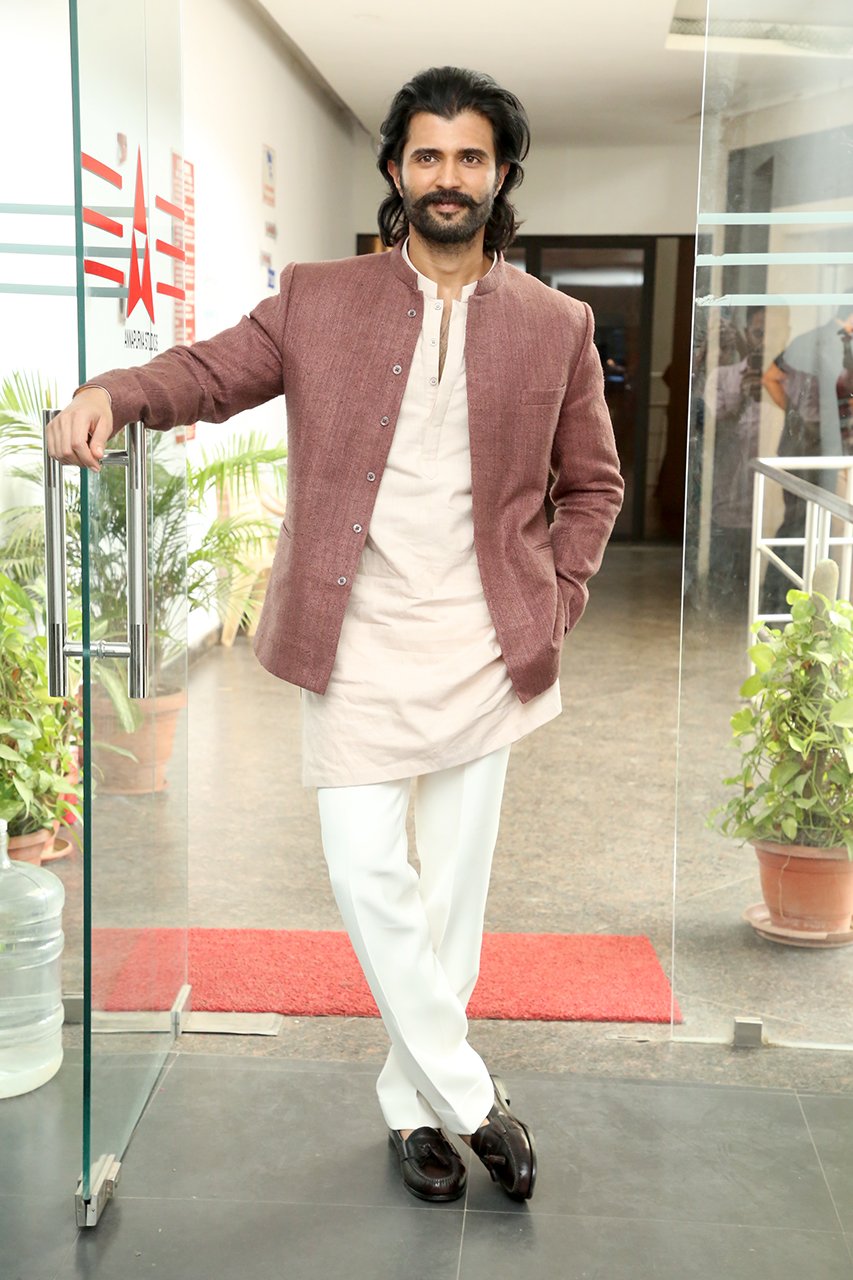
I find that approach interesting because every region has its own identity, language and storytelling traditions. Exploring those differences allows an actor to discover something new.
If I get an opportunity to work on a devotional film or a biopic that genuinely interests me, I would certainly consider it.
For now, I am excited about bringing Ranabaali to audiences. We have made it with a clear purpose, and I hope viewers connect with its emotions, its characters and the history it seeks to bring to light.