


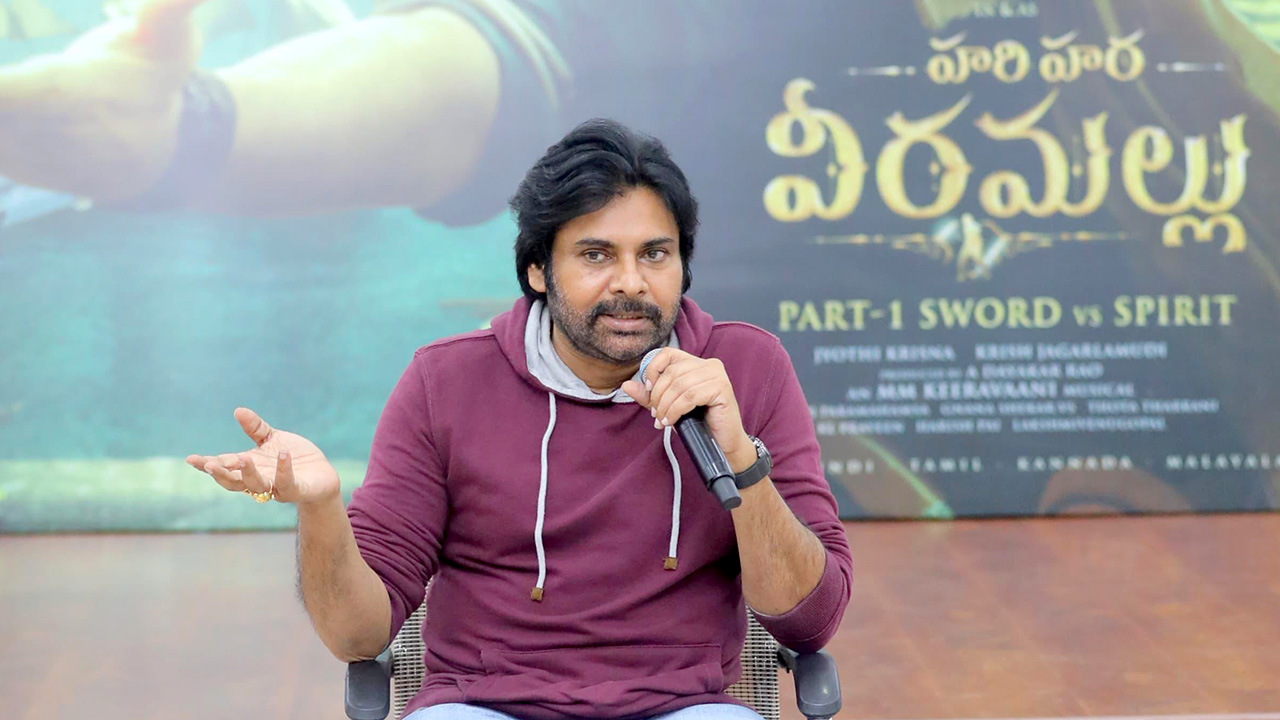
Hari Hara Veera Mallu Is a War for Dharma, Not Just Cinema – Pawan Kalyan
A warrior’s bow raised for Dharma, a story forged in struggle, and a leader who speaks from the heart — Hari Hara Veera Mallu isn’t just a film, it’s a rebellion against tyranny. Ahead of its grand release, Deputy Chief Minister Pawan Kalyan opened up in a rare and candid interaction with the media, revealing the spiritual core of the story, the political hurdles faced during its making, and why this film is more than just cinema — it’s a personal battle, a tribute to resilience, and a statement of faith.
Q: Is Hari Hara Veera Mallu rooted in Sanatana Dharma?
A: Absolutely. The film revolves around a warrior who stood against the tyranny of Mughal emperor Aurangzeb, who imposed taxes on Hindus just to follow their faith. It’s a fight to uphold Dharma in the face of brutal oppression.
Q: As the Deputy Chief Minister, how do you juggle cinema, politics, and governance?
A: Politics is my foremost duty. But cinema gave me identity, sustenance, and purpose. It’s not just a profession—it’s part of who I am.
Q: This is the first time you’re actively promoting a film. Why now?
A: Hari Hara Veera Mallu is a very special project. It faced natural calamities, political hurdles, and even targeted sabotage. The producers stayed strong, and standing by them is my moral duty. Promoting this film is my responsibility, not just a task.
Q: You’ve hinted at struggles during production. What exactly did you face?
A: The challenges were immense—both political and systemic. I was detained in Visakhapatnam for no valid reason. The previous government unfairly slashed ticket prices, specifically targeting films associated with me. Yet, we persevered and completed the film with resilience.

Q: Has the situation changed since the beginning of this journey?
A: Every day of this film’s journey was a fight. But I believe struggle shapes character. We chose to move forward—no matter what.
Q: Ticket prices were reduced under the previous regime but now they’re back up. Your take?
A: The ticket hikes are based on each film’s merit and the producer’s efforts—not just for mine. The current government is giving due recognition to the hard work behind cinema.
Q: Will you host a special screening for legislators and political representatives?
A: That’s a thoughtful suggestion. I hadn’t considered it until now—but yes, I will arrange a special screening for MLAs, MLCs, MPs, and Ministers.
Q: You directed Johnny, which didn’t perform well. You’ve directed the climax of HHVM—what’s changed?
A: Johnny was a painful but crucial lesson. After its failure, I personally cleared dues and took a break. That experience taught me to accept failure with grace—lessons I carried into both filmmaking and politics.
Q: Will HHVM face any theatre shortage? And what’s the status of Part 2?

A: No issues with theatres. And yes, Part 2 is already underway—about 20% of it is completed.
Q: Will you continue acting in films while holding political office?
A: That’s up to God. If it’s meant to be, it will happen.
Q: What does Andhra Pradesh need to build a film ecosystem like Hyderabad?
A: Infrastructure is key. Especially film institutes. Build those, and talent, opportunity, and industry growth will follow.
Read Also: Thug Life Review: A Visually Grand But Not Impressive