


Rajamouli Elevates Varanasi with Advanced Motion-Capture Technology in Hyderabad
Filmmaker S. S. Rajamouli is once again making headlines, this time for pushing the boundaries of Indian filmmaking with advanced motion-capture technology for his upcoming film Varanasi. Known for delivering visually spectacular blockbusters, Rajamouli appears to be taking another major leap by embracing cutting-edge virtual production techniques that are widely used in Hollywood.
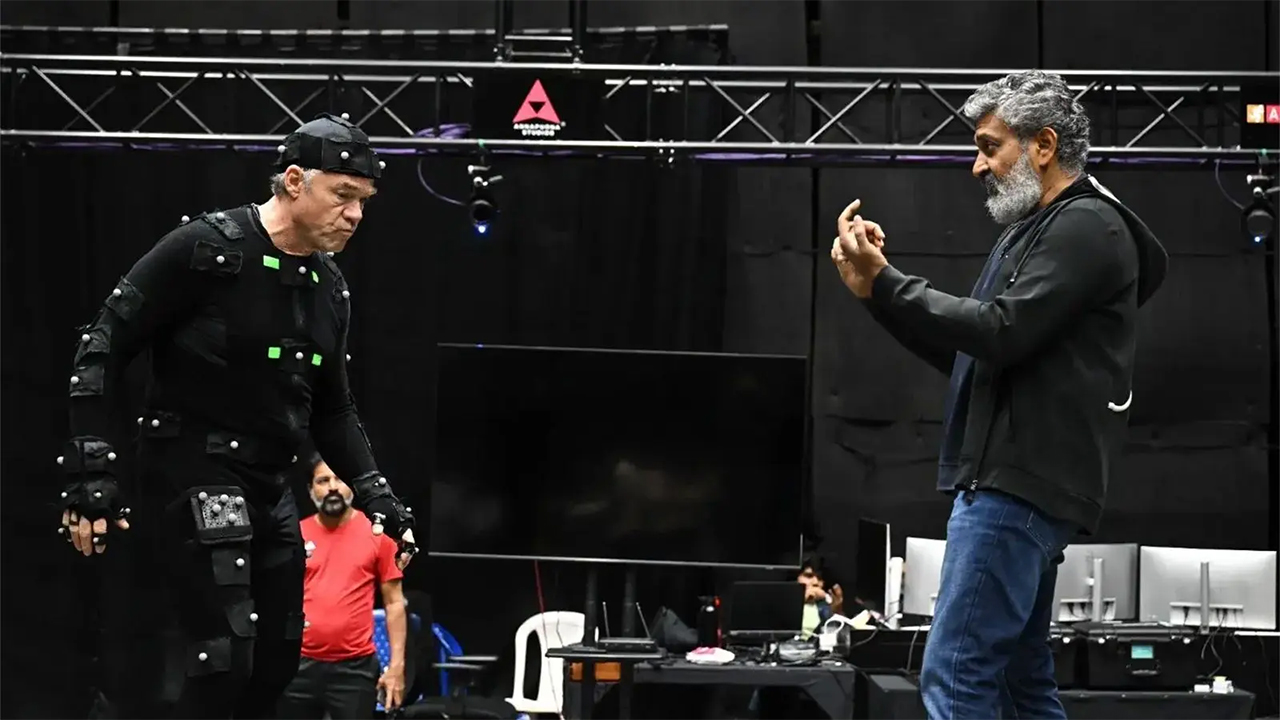
According to recent reports, crucial sequences of Varanasi were filmed at a newly established motion-capture facility in Hyderabad. The state-of-the-art studio, named A&M Motion Capture, is housed within Annapurna Studios, owned by veteran actor Akkineni Nagarjuna. Interestingly, the facility was inaugurated earlier this year in February by Rajamouli himself, signaling the importance of this technological advancement for Indian cinema.
The motion-capture studio is a collaborative venture between producer Shobu Yarlagadda’s Mihira Visual Labs and the Hollywood-based company Animatrik Film Design. This partnership brings together international expertise and local filmmaking talent, creating a powerful ecosystem for high-end visual storytelling. The move is seen as a significant step toward bridging the technological gap between Indian and global cinema.
The film’s star cast, featuring superstar Mahesh Babu and global icon Priyanka Chopra Jonas, reportedly filmed a pivotal 25-minute-long sequence using this facility. Industry insiders describe this segment as one of the most thrilling portions of the film, hinting at a visually immersive experience that could redefine action storytelling in Indian movies.

At the heart of this innovation lies sophisticated technology. The studio utilizes high-precision Vicon Valkyrie (VK26) cameras capable of capturing intricate movements with exceptional accuracy. Alongside this, Vicon Live enables real-time data streaming, while Vicon Post handles detailed processing. The integration of Unreal Engine allows filmmakers to instantly visualize scenes during production, significantly enhancing creative decision-making.
CTO CV Rao and producer Shobu Yarlagadda recently elaborated on the two major applications of motion capture. First, it plays a crucial role in pre-visualization, especially for complex action sequences involving multiple characters. The 360-degree capture system records blocking, camera angles, and lens choices, enabling directors to fine-tune scenes without costly reshoots. Second, the technology captures full-body and facial performances, which can later be transferred onto digital characters or creatures with remarkable realism.
This approach is reminiscent of techniques used in global blockbusters like Avatar, directed by James Cameron. By adopting similar methodologies, Rajamouli is positioning Indian cinema to compete on an international scale, both technically and creatively.
Previously, Indian productions relied heavily on conventional camera-based pre-visualization methods, which often required an additional 10 to 15 days of shooting. Any creative changes meant costly retakes and extended schedules. However, with the introduction of this motion-capture setup, filmmakers can now finalize designs, equipment, and manpower requirements well in advance, drastically reducing inefficiencies.

In fact, the studio claims that this technology can cut down overall production time to less than 60 percent of traditional schedules. While the benefits are substantial, the transition has not been without challenges. The team reportedly faced hurdles in sourcing high-resolution 26-megapixel cameras, which significantly increased the project’s budget. Despite these obstacles, the long-term advantages of such a system are expected to outweigh the initial investment.
The establishment of this facility was the result of discussions that began in 2023, when filmmakers and actors highlighted the lack of advanced motion-capture infrastructure in India. Recognizing this gap, Annapurna Studios took the initiative to build a world-class setup that could support ambitious projects like Varanasi.
With this new motion-capture facility, Annapurna Studios is poised to become a hub for next-generation filmmaking in India. By enabling large-scale action sequences, virtual production, and high-quality digital performances, the studio is setting a new benchmark for the industry. As Rajamouli continues to innovate, Varanasi could mark a turning point, not just for his career, but for the future of Indian cinema as a whole.